
Where engineering, compliance, and logistics come together to protect people, property, and the planet
Every day, thousands of shipments move around the world, by air and by sea, containing dangerous goods. These are often “common items,” like lithium batteries, that if not properly identified and handled, can pose serious risk to people, property, and the environment. Dangerous goods shipments are vital to the global supply chains of semiconductors, energy, aerospace, biotechnology, and medical equipment.
But they are also high stakes shipments. Any missteps in packaging, labeling, or documentation can quickly result in serious incidents, regulatory fines, or environmental damage. That’s why compliance isn’t just a box to be checked; it’s a serious responsibility.
TransPak has built its reputation as a trusted partner for dangerous goods logistics by combining engineering expertise, certified compliance, and a focus on protecting customers, people and communities, not just cargo.
What are Dangerous Goods?
Dangerous goods are materials that can pose a risk to health, safety, environment, or property during transport. They are divided into nine hazard classes according to the type of risk they present and their attributes.
- Class 1 – Explosives: Dynamite, fireworks, ammunition
- Class 2 – Gases: Flammable, non-flammable, compressed, or toxic
- Class 3 – Flammable Liquids: Gasoline, ethanol, paint thinner
- Class 4 – Flammable Solids: Substances that ignite easily or emit flammable gas on contact with water
- Class 5 – Oxidizing Substances & Organic Peroxides: Oxygen, chlorine, benzoyl peroxide
- Class 6 – Toxic & Infectious Substances: Pesticides, clinical samples, blood products
- Class 7 – Radioactive Materials: Medical isotopes, nuclear materials
- Class 8 – Corrosives: Acids, alkalis, industrial chemicals
- Class 9 – Miscellaneous: (e.g. Lithium batteries and other regulated DG)
Lithium batteries are the most common dangerous goods TransPak handles, shipped globally across high-tech, data center, aerospace, and EV supply chains. Transportation requirements vary by mode, battery kWh, and weight.
Dangerous Goods Regulations
Under US regulations, 49 CFR hazmat regulations, anyone involved in classifying, packaging, labeling, preparing shipping papers, or overseeing transportation safety must complete rigorous training. This broad definition of “hazmat employee” ensures that every touchpoint in the logistics chain, not just drivers, is covered by a compliance-first approach.
Our teams adhere to all required regulations under:
- International Maritime Organization IMDG Code
- United States Department of Transportation (DOT / 49 CFR)
Integrated Solutions that Reduce Risk
Across its network, from San Francisco to Taiwan, TransPak employs a large team of DG-certified specialists trained in dangerous goods. TransPak has 22 Dangerous Goods certified employees across the globe to meet these stringent standards.
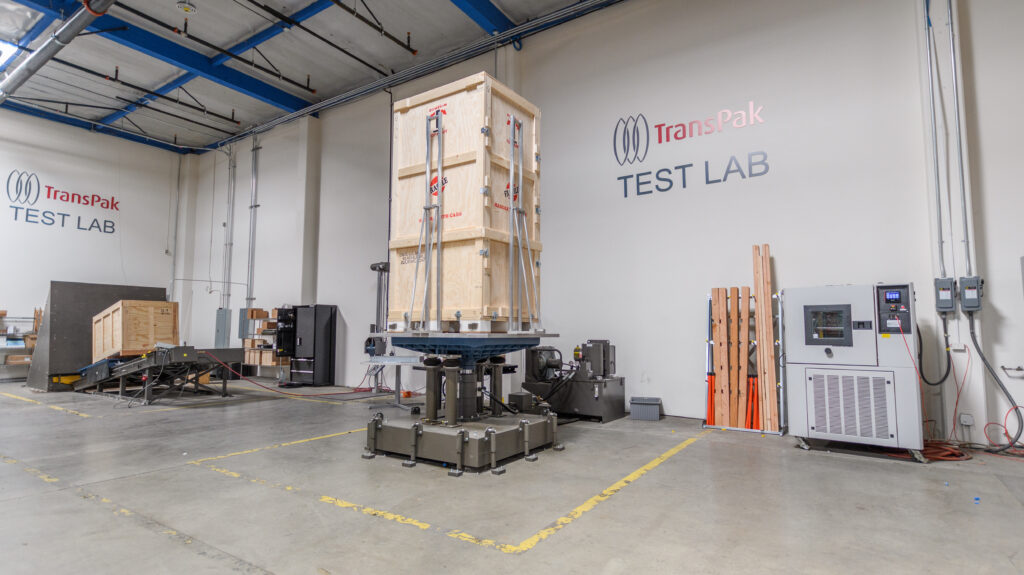
TransPak is one of the few logistics providers in the world to integrate dangerous goods management into its core operations. At the Global Design Center and Test Lab in California, TransPak’s engineers design and test packaging intended for qualification as UN-rated packaging to ensure it meets or exceeds both performance and regulatory standards. In-house engineering, combined with logistics and compliance, creates a single point of accountability from concept to delivery.
Because TransPak integrates packaging, testing, and logistics capabilities within one organization, customers never have to deal with the gaps and handoffs that can lead to compliance risks. The company’s integrated dangerous goods solutions cover engineering, packaging design, labeling, documentation, regulatory compliance, and transportation. This end-to-end structure reduces exposure to fines, delays, and incidents, and maintains a consistent global standard.
A Global Network, A Trusted Partner
With more than 80 facilities across 15 countries, TransPak brings together global reach and local regulatory expertise.
TransPak offers a proven combination of DG-certified personnel, advanced testing and engineering capabilities, and a global logistics network to keep customers’ shipments compliant.
For more information on TransPak’s logistics capabilities, visit Global Logistics Solutions and Tracking | TransPak.