
Inside the minds of TransPak’s newest engineers shaping sustainable, innovative packaging solutions
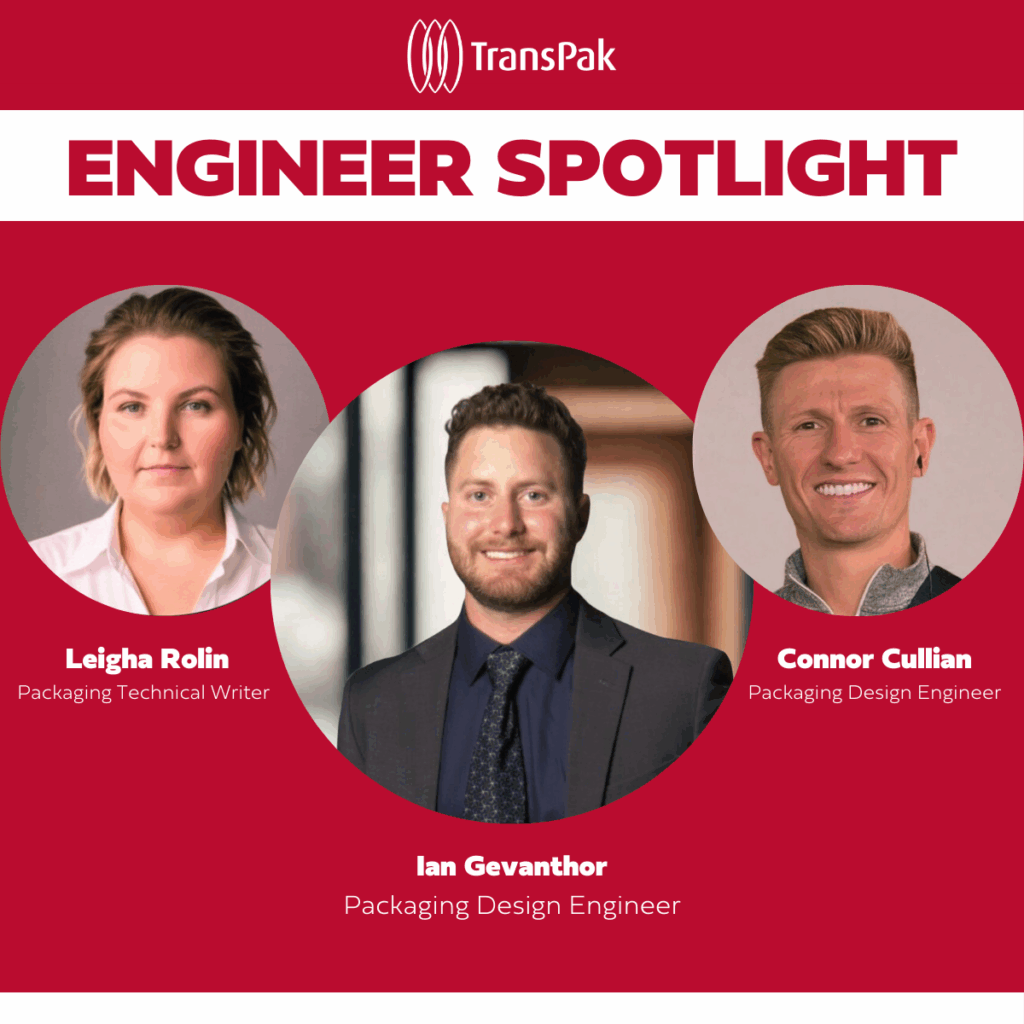
At TransPak, packaging isn’t just about corrugated, foam, and crates, it’s about engineering creative, sustainable solutions for the world’s most complex products. Recently, we sat down with three of our newest team members, Leigha Rolin, Ian Gevanthor, and Connor Cullian, to hear about their backgrounds, what drew them to packaging engineering, and why they’re excited to be part of the TransPak team.
Q: What inspired you to get into packaging engineering?
Connor: My background is in mechanical product design and manufacturing. What first hooked me was when Apple launched the iPhone. They really set the stage for the concept that packaging isn’t just a box, it was part of the product experience.
Consumer packaging is obviously different than industrial packaging, however, both share a lot of same design constraints such as ease of use, sustainability, and most importantly, product safety. I find these to be very fascinating from a design standpoint.
Ian: I’ve always been drawn to product design. While studying at Cal Poly, I realized packaging was integral to design, every product needs it. After graduating, I joined Tesla as a mechanical design engineer and worked on everything from steel to mechanical packaging. That’s where I fell in love with the creativity behind packaging design.
Leigha: I studied architectural engineering but ended up interning at a box manufacturer almost by accident; my resume said “engineering,” and that’s where I got matched. From there I learned packaging from the ground up; corrugated, foam, crating, cold chain, and eventually moved into technical writing. At TransPak, I now use that mix of experience to write technical packaging and crating standards and SOPs for our customers.
Q: Sustainability is a huge topic in packaging. How do you balance cost, performance, and sustainability?
Ian: It really depends on the customer’s requirements. We often design packaging to be reusable or multifunctional; for example, a crate that doubles as a fixture in the manufacturing process. That eliminates the need for extra equipment and saves resources when looking at the cradle-to-cradle or cradle-to-grave life cycle.
Leigha: In packaging, sustainability can’t be looked at in isolation—it has to work hand in hand with cost and performance. For example, we’re working with a customer right now on crates designed for 50-70 reuse cycles. Instead of being scrapped after one trip, they’re inspected, repaired, and redeployed.
From a performance standpoint, the crates still protect the product at the same level as a one-time-use design. From a cost perspective, the initial investment is higher, but spread over 70 uses, the per-trip cost is significantly lower.
And from a sustainability lens, you’re reducing landfill waste, material usage, and carbon footprint tied to constant re-manufacturing.
Connor: Reusability is key. We’re also moving toward crateless designs for data storage racks, which cut material use. Another technique is making packaging more serviceable, so instead of scrapping an entire base, you just replace one component and it’s like new. Sometimes sustainable solutions cost more upfront, but when you show customers the ROI, like getting 10 uses instead of 2, they see the long-term value.
Q: What’s the most unusual product you’ve ever had to package?
Connor: Before TransPak, I worked on designing beverage packaging machinery. Figuring out how to move and handle empty and even filled aluminum cans without crushing them sounds simple, but it can actually be quite tricky, especially when moving high volumes.
Ian: Wheels are surprisingly difficult. In a previous position, I helped design an innovative vertical spiral conveyor system to efficiently package and move tires with rims. It eliminated a manual process that wasn’t meeting the company’s needs, saving a lot of time and resources.
Leigha: Working with paper manufacturers, distributors, and agencies has exposed me to a wide range of packaging challenges. Over the years, I’ve developed packaging for everything from baby chicks and diabetic socks to gutter systems, caskets, and K-Cups. In packaging, you truly never know what product will land on your desk—and that variety is what makes the work both challenging and exciting.
Q: What do you like most about working at TransPak so far?
Ian: Having come from a public company, I appreciate the private, family-owned feel here. There’s more passion and less “rush for quarterly numbers.” It feels like we’re building something together.
Connor: Agreed. At big corporations, you’re often just one cog in the machine. At TransPak, new ideas are welcomed and encouraged. If you see a better way to do something, leadership listens and empowers you to run with it.
Leigha: What I’ve really appreciated at TransPak is how open leadership is to improvement. I’ve already shared some process change ideas, and they were encouraged rather than dismissed. It creates a culture where everyone can do their best work.
Q: Any final thoughts on packaging?
Ian: People often forget that packaging is part of the product. With creative design, packaging can be reused, serve new purposes, and add real value beyond delivery.
Leigha: Sometimes the packaging even becomes part of the customer’s world—like Inserts inside the box that turn into ramps or scooter stands. It’s where problem-solving meets creativity.
Connor: And that’s the exciting part, balancing performance, sustainability, and cost while designing smarter packaging that makes life easier for both the customer and the end-user.
At TransPak we believe that packaging is an opportunity for innovation and sustainable solutions. Creative, talented packaging engineers like Leigha, Ian, and Connor are at the heart of packaging’s future: producing solutions that not only protect products but also reduce waste and deliver value well beyond delivery. We’re excited to welcome them to the TransPak family, and we’re excited to see what they build next.
Learn more about how TransPak engineers smarter packaging solutions here.