
How TransPak's investment in advanced materials testing is helping engineers validate designs, qualify suppliers, and make packaging decisions with greater confidence.
Every packaging solution begins with materials.
Whether it’s plywood, foam, rubber isolators, adhesives, or other components, the performance of every material influences the final package. Before those materials become part of a customer’s packaging solution, engineers need confidence that they’ll perform consistently and meet the required performance standards.
That’s one of the driving forces behind TransPak’s new R&D Lab.
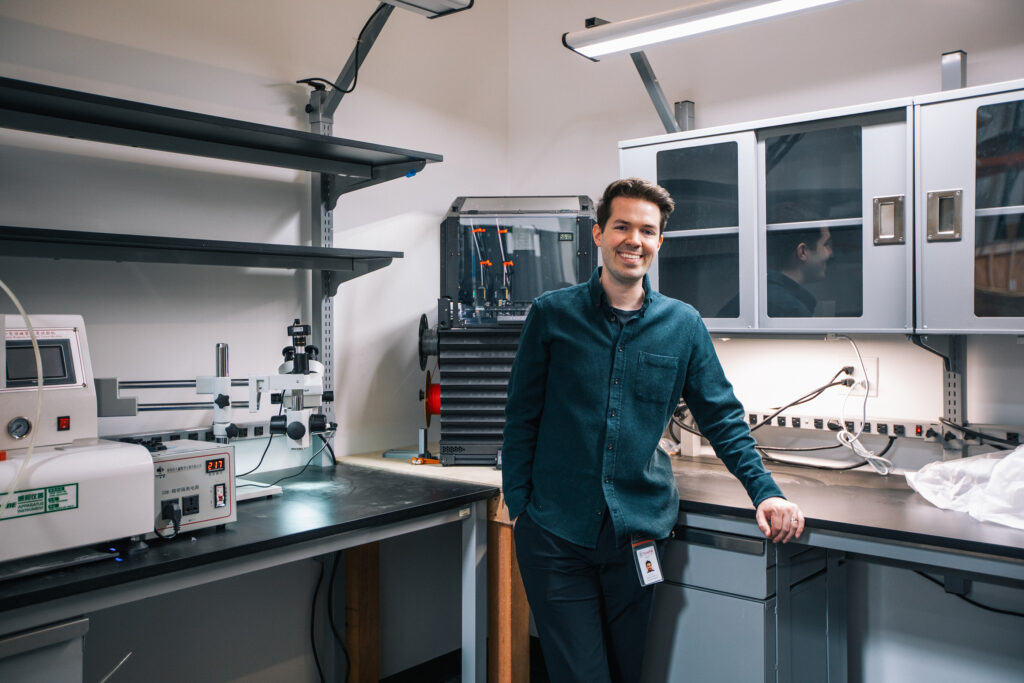
As part of ongoing renovations at the Hayward Test Lab, TransPak is building a dedicated Research & Development Lab designed to strengthen how engineers evaluate packaging materials, qualify suppliers, and validate engineering decisions before those materials ever make their way into customer packaging solutions.
At the center of the new R&D Lab is a custom Instron Universal Testing Machine (UTM), one of the most recognized materials testing systems in the packaging engineering industry. Its greatest value isn’t simply the number of tests it can perform, but the accurate, consistent, and repeatable data it provides, giving engineers greater confidence in the materials they evaluate.
Rather than relying solely on supplier specifications, TransPak engineers will be able to independently evaluate material performance using controlled laboratory testing.
That means engineering decisions backed by measurable data, not assumptions.
Qualifying Suppliers with Confidence
One of the primary goals of the new R&D Lab is strengthening supplier qualification.
Many of the materials used in engineered packaging, including plywood, foam, and other structural components, are sourced from multiple suppliers. Before introducing a new supplier, engineers need objective ways to compare those materials against the products already being used.
The R&D Lab gives engineers quantifiable mechanical data they can use to evaluate properties such as stiffness, strength, shear performance, or material adhesion, depending on the application. That data helps ensure materials perform consistently regardless of where they’re sourced, giving customers greater confidence in the finished packaging solution.
It also allows TransPak to verify that supplier materials meet the performance levels they advertise, rather than relying solely on supplier-provided specifications.
Why In-House Testing Matters
Performing this type of testing in-house gives engineers greater flexibility throughout the design process.
Without these capabilities, specialized material testing often requires working with third-party laboratories. While those laboratories remain valuable partners, they may only perform established industry-standard tests and may not be equipped to run custom testing methods developed for unique engineering questions.
By bringing these capabilities in-house, TransPak engineers can develop and execute custom test protocols when standard methods don’t exist or don’t fully answer the question being asked. That flexibility allows the engineering team to gather the specific data needed to evaluate new materials or investigate unique packaging challenges without being limited by outside testing capabilities.
The result is faster material evaluation, greater engineering flexibility, and more control over the testing process.
The Value of Repeatable Data
At the center of the new lab is the Instron Universal Testing Machine.
For engineers, the value of the system isn’t simply the number of different tests it can perform; it’s the consistency of the results.
The system is designed to generate highly accurate, consistent, and repeatable data, allowing engineers to compare materials under identical conditions and make engineering decisions based on measurable performance. Its high-force capacity also enables engineers to evaluate a broader range of materials in-house.
Consistent data is essential when comparing suppliers, validating new materials, or evaluating design changes because it allows engineers to measure exactly how one material performs relative to another under the same conditions.
Turning Better Data into Better Packaging
Most customers will never see the equipment inside the R&D Lab, but they’ll benefit from the engineering decisions it supports.
For example, a customer may need to protect a sensitive electronic assembly from shock and vibration during transportation but may be unsure which foam type and thickness will provide the right level of cushioning.
Using the UTM, engineers can compress foam samples under controlled loads and measure how each material responds. The test can show whether the foam is too soft and allows excessive movement, or too firm and transfers too much force to the product.
Engineers can compare different foam densities, thicknesses, and configurations using the same test method. Based on the results, they can select a cushioning design that supports the product properly, absorbs anticipated loads, and avoids unnecessary material.
This gives the customer a packaging solution based on measured cushioning performance rather than selecting foam through trial and error.
If the material performs as expected, engineers gain confidence that the design is appropriate. If it doesn’t, they can modify the design and immediately validate the improvement using the same repeatable testing method.
That process helps optimize packaging designs, so they are neither over-engineered nor under-engineered, providing customers with packaging solutions that are better aligned with their specific application and performance requirements.
For customers, that translates into more informed engineering conversations and packaging decisions supported by measurable data.
Supporting Sustainable Material Innovation
These new testing capabilities also give TransPak’s engineers a way to evaluate emerging, more sustainable material alternatives.
As new packaging materials enter the market, engineers can independently test their performance against TransPak’s engineering requirements instead of relying solely on supplier data. This allows the team to better understand whether alternative materials meet the performance standards required for real-world applications before they’re introduced into customer packaging solutions.
From a Design for Sustainability perspective, testing helps engineers understand the relationship between material efficiency and package performance. A material may have a stronger sustainability profile, but it must still provide the protection, durability, and structural integrity required for the application. By generating repeatable performance data, engineers can identify where alternative materials can be introduced without increasing the risk of product damage or compromising package safety.
Testing may also reveal opportunities to reduce overall material use. For example, engineers can compare different material grades, thicknesses, and structural configurations to determine whether a lighter-weight or lower-impact option can achieve the same performance as the original design. This supports source reduction and right-sizing by helping eliminate unnecessary material while maintaining the required protection level.
By validating sustainable materials through controlled testing, TransPak can introduce new solutions with greater confidence. Customers benefit from packaging designs that are not only engineered to perform but also developed with measurable opportunities to reduce material consumption, waste, and environmental impact.
Looking Ahead
The new R&D Lab represents another investment in TransPak’s engineering capabilities.
By bringing advanced materials testing in-house, engineers gain new tools for qualifying suppliers, validating materials, developing custom test methods, and optimizing packaging designs through objective, repeatable data.
As the Hayward Test Lab continues to expand, these capabilities will help strengthen the engineering process long before a package reaches production—giving customers greater confidence that every packaging solution is built on validated performance rather than assumptions.